Japanese Fundamentals
— Before moving on to memorize kanas, you should know the fundamentals.
1. A First Glimpse of Japanese
Compare the following sentences in three languages, Japanese, English and Chinese:
- オンラインで日本語を学ぶ
- Learn Japanese Online
- 在线学习日语
Do you notice something unusual about the Japanese sentence?
Unlike English or Chinese, Japanese writing combines several different types of characters in a single sentence:
- Katakana: オンライン (onrain, “online”)
- Hiragana: で, を, ぶ (de, wo, bu)
- Kanji: 日本語 (nihongo, “Japanese”), 学 (mana, “to learn”)
This mixture often surprises beginners. Why would a single language need multiple writing systems? The answer lies in its history.
2. Before Writing: The Spoken Language
For centuries, Japanese existed only as a spoken language.
There was no native writing system.
For example “cat”, only has pronunciation but no corresponding text.
That changed in the 4th to 5th centuries, when Chinese characters were introduced to Japan—primarily through Buddhist missionaries and cultural exchange with China and Korea.
For example, the Chinese character 猫 means cat.
When borrowed into Japanese, it came to represent neko (the Japanese word for “cat”).
However, early use of Chinese writing was limited. Why?
- Logographic complexity: Each character conveys meaning, not sound, which made it difficult to learn.
- Mismatch with spoken Japanese: Many native Japanese words and grammar patterns had no direct equivalent in Chinese characters.
3. The Invention of Kana
To solve these issues, the Japanese developed kana in the 8th century.
Kana is a phonetic script, meaning each symbol represents a syllable sound rather than a meaning.
This allowed Japanese speakers to write their language as it was spoken.
In other words, kana transformed Japanese from a language dependent on imported Chinese symbols into one with a native system of expression.
4. Hiragana and Katakana: Two Phonetic Scripts
Japanese kana eventually divided into two parallel scripts:
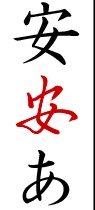
- Hiragana (ひらがな)
- Derived from the cursive form of Chinese characters.
- Soft, rounded shapes.
- Used for native words, grammar particles, and inflection endings.
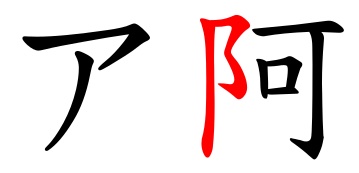
- Katakana (カタカナ)
- Derived from fragments of Chinese characters in regular script.
- Sharp, angular forms.
- Used for foreign words, onomatopoeia, and sometimes emphasis.
Each system consists of 46 basic characters, representing the same set of sounds.
They function somewhat like uppercase and lowercase letters in English—different forms, same pronunciation.
5. A Writing System of Three Layers
By the Heian period (8th–12th centuries), Japan had created a unique three-layered writing system:
- Kanji (漢字) – Borrowed Chinese characters, carrying meaning.
- Hiragana (ひらがな) – Native phonetic script, soft and flowing.
- Katakana (カタカナ) – Native phonetic script, angular and sharp.
This blend allowed Japanese writing to represent:
- Meaning (kanji)
- Sound (hiragana and katakana)
- Grammar (hiragana particles, endings)
- Foreign concepts (katakana)
6. Why More Characters Doesn’t Mean More Difficulty
At first glance, having three scripts might seem overwhelming.
But in practice, the system has a clear logic:
- Kanji handles the heavy lifting of meaning.
- Kana makes the grammar and pronunciation explicit.
- You can always choose not to write kanji. "オンラインで日本語を学ぶ" can be written as "オンラインでにほんごをまなぶ".
- Once you leanred the kanas you can read all Japanese words. In comparison, after learning the English alphabet, you still need to memorize the pronunciation of each word.
| / | English Alphabet | Japanese Kana |
|---|---|---|
| quantity | 26 | 46 |
| extension | 0 | 25 + 33 |
| total sounds | >168 | 46 |
| logic | Each letter represents multiple sounds | Each character represents one sound |
7. Moving Forward
To begin your study of Japanese, the recommended path is:
- Learn hiragana (46 characters)
- Learn katakana (46 characters)
- Gradually add kanji, starting with the most common ones